Our ESG Approach

At Royal Unibrew Group, we work with environmental, social, and governance (ESG) topics as part of our corporate strategy. This work reflects our broader ambition to be THE PREFERRED CHOICE for the future. Our focus areas include:
Offering a broad portfolio of great tasting beverages, including no and low sugar and alcohol options
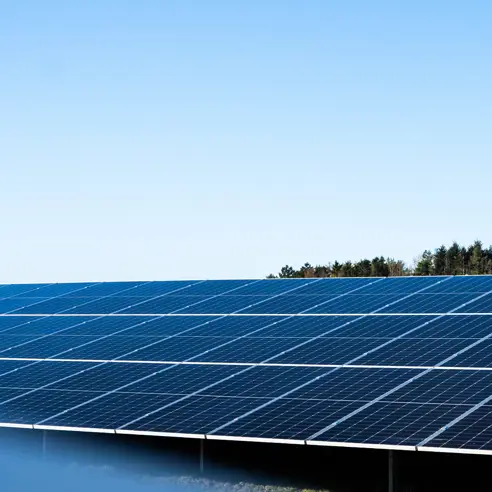
Decarbonizing our operations and logistics
Promoting water stewardship and efficiency
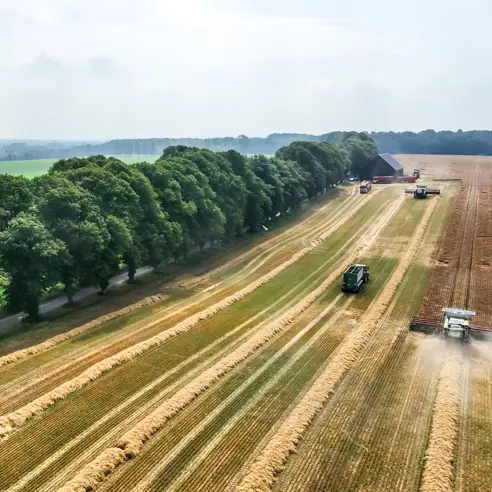
Working with suppliers on agricultural practices
Protecting biodiversity and certified sourcing
Providing a healthy, safe, and developmental working environment
Our approach is guided by recognized frameworks and reporting requirements, including the UN Global Compact, TCFD, SBTi, TNFD, SBTN, and EU CSRD. Our work is integrated into our governance and risk processes, with oversight from senior leaders and the Board.

What Guides Us
Our ESG approach is built on three pillars that guide our work:
- Our Consumers and Customers: We listen to our consumers and customers and continuously develop our beverage portfolio to reflect changing preferences and market trends. This includes offering a broad range of beverages across categories including no- and low-alcohol and no- and low-sugar options.
- Our Products: Our product innovation includes work on sourcing and packaging, including packaging-related initiatives across our product portfolio.
- Our People: We work to foster an inclusive, safe, and performance-driven workplace culture that supports development, accountability, and well-being. Safety is a key priority, and we continue to strengthen our safety practices to support injury prevention across our operations.
Our Goals


Climate Targets Validated by SBTi in 2022
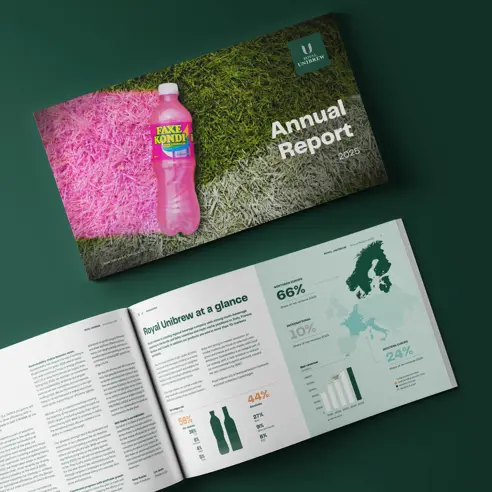
We recognize the critical role businesses play in combating climate change. Therefore, we have established targets and roadmaps for reducing the potential impact. For details on our transition plan, please dive into our annual report. In 2022, our targets were validated by the Science Based Targets initiative (SBTi). The targets are aligned with the 1.5°C pathway and measured in terms of absolute CO₂e emissions reductions.
The aim is to reduce emissions within the near-term 2030 and longer-term 2040 for scope 1, 2, and 3. As a company reliant on agriculture-based raw materials and fiber-based packaging materials, we have separate targets for FLAG.
Targets validated by Science Based Targets initiative:
Net-zero by 2040, including full Scope 1, 2, and 3 emissions, including FLAG
60% reduction in total emissions across our value chain (scope 1, 2, and 3 by 2030, compared to 2019)
To get there, we are investing in renewable energy, energy efficiency, and logistics. We work with selected initiatives related to packaging, agriculture, distribution, and refrigeration, focusing on resource use and operational efficiency.
Currently, Scope 1 and 2 emissions account for approximately 10% of our total carbon emissions, while Scope 3 emissions represent about 90%. Together with our suppliers and business partners, we are dedicated to enhancing climate resilience and achieving our goals.